
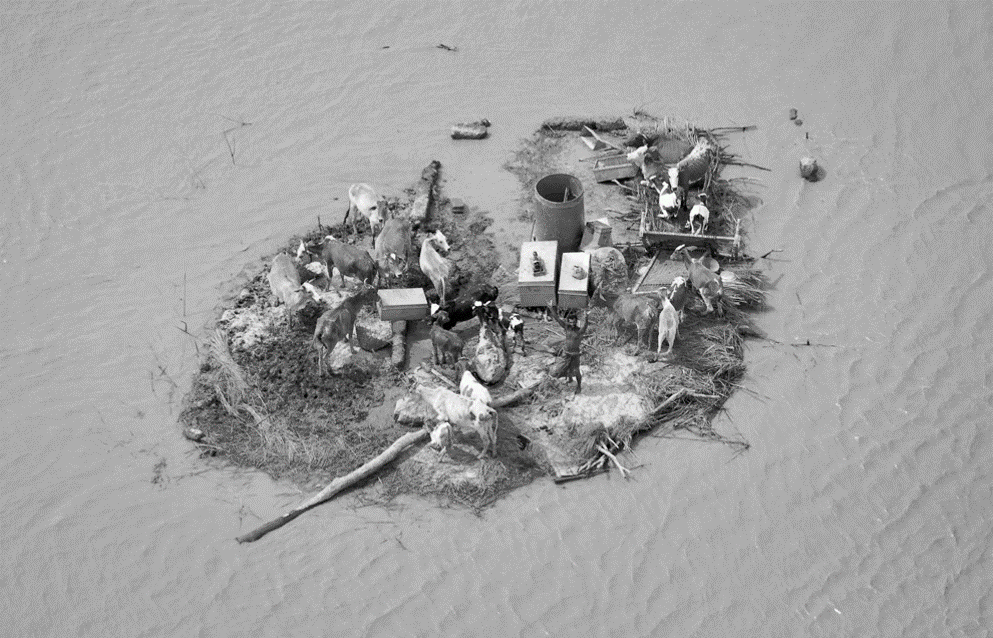
Heraclitus said 2500 year ago that ever–present change was the fundamental essence of the universe. We live in a turbulent ands stochastic world where we need to regularly adapt our actions, processes and structure to a constant modification of the “established” rules. Past and recent history have shown the occurence of massive and catastrophic events that had not been predicted or anticipated.
The 2008 financial crisis, the collapse of Libya , the Danish cartoon controversy were all big surprises which were overlooked, not properly measured and finally produced unforseen effects.
The occurence of natural disasters or malevolent acts cannot be reduced to mechanic treatment based on the belief that people behave rationnally but rather to a critical thinking exercises based on multiple facts and hypotheses.
The trilogy of uncertainty, non linearity and complexity are increasingly prevailing factors in some working environments and is the background against which many organisations have to manage their security risks and develop relevant risk management response. These are not inevitable acts of God or incommensurable events but they need to be seen as an integrated part of our risk management thinking informed by rigid planning .
In addition, the conjunction of internal shortcomings and volatile environment lead us to seriously consider the emergence chaotic system behiavour, cascading effects and massive impact on reputadely robust organisations as object of particular interest. Our environment is full of singularities that cannot be captured by traditionnal tools.